Piva Lake: Experience a Peaceful Nature Escape
Discover Piva Lake, a quiet corner with clear turquoise water, plenty of activities and a small lakeside town, along with practical tips for a perfect visit.
Piva Lake: A Complete Guide for Visitors
When someone mentions the north of Montenegro, the first associations are usually Durmitor or the Tara Canyon. Piva Lake rarely makes it into that first group, and that is exactly why this place still feels the way the mountainous north should feel: quiet, clean and, most importantly, without big crowds. At 45 kilometers long, up to 188 meters deep and with a dam 220 meters high, it is the largest artificial lake in Montenegro and one of the most striking in all of Europe.
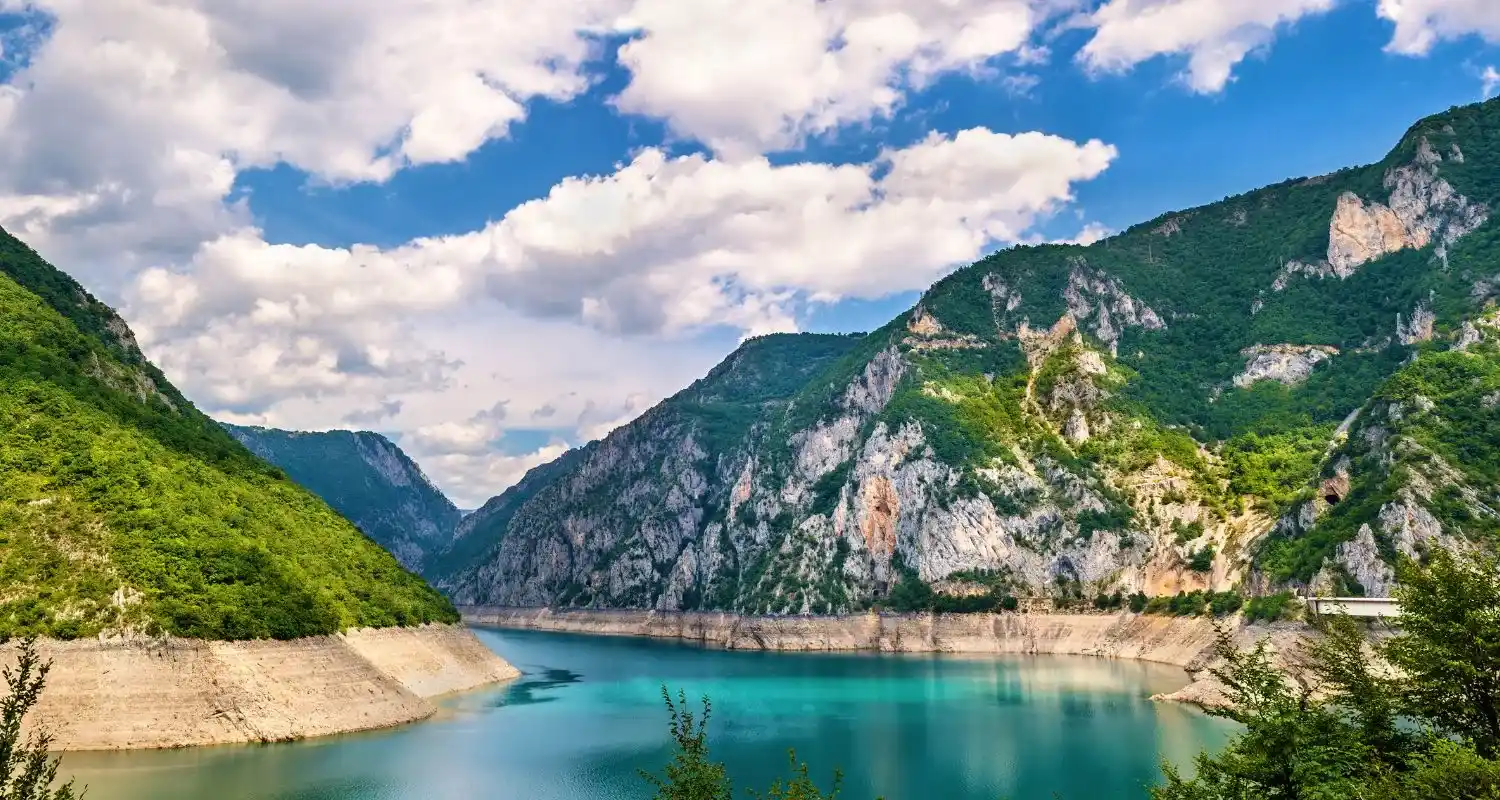
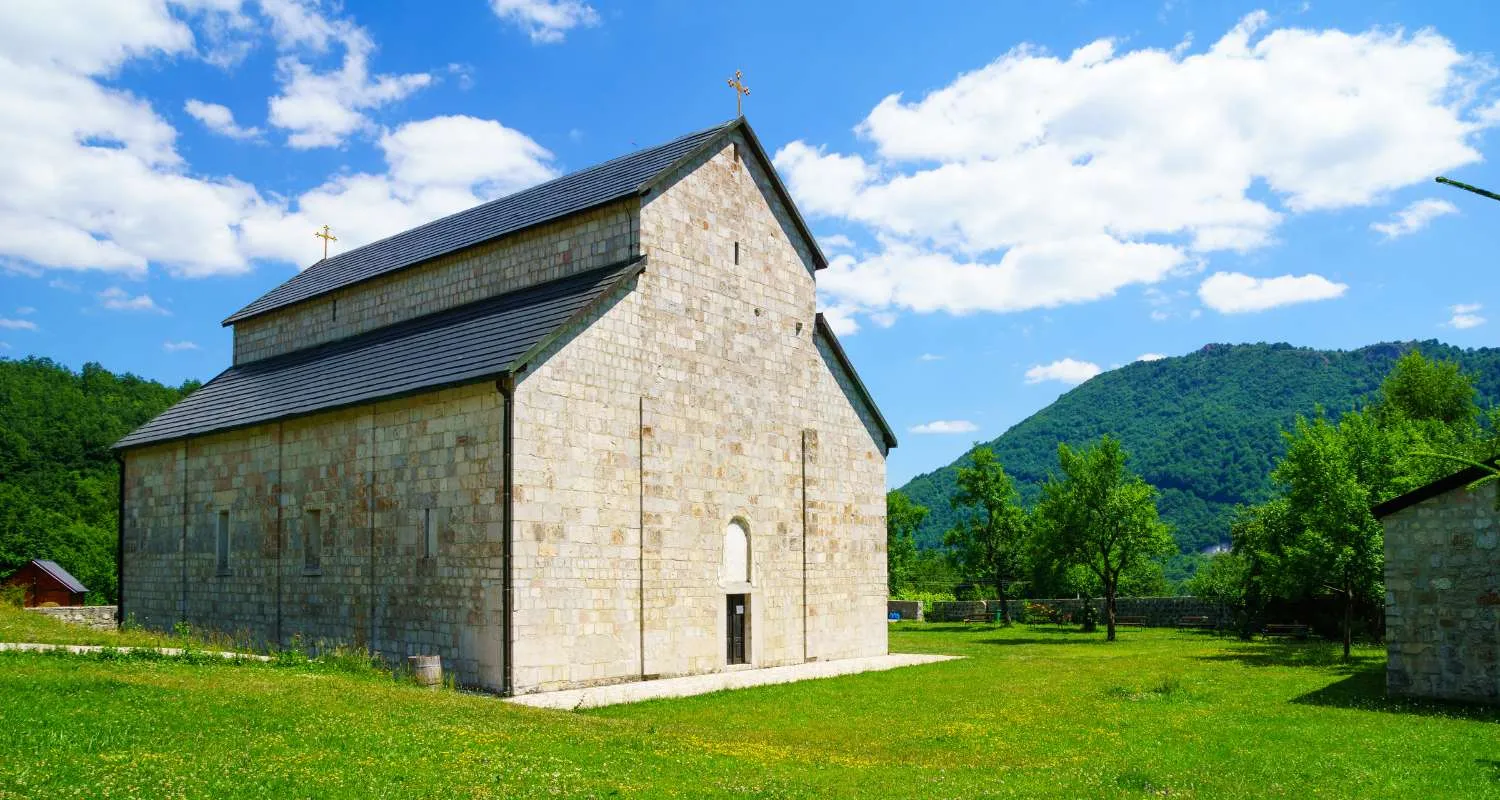
Beneath the surface of this lake lies an entire town. Old Plužine, once a small town with houses, streets and a church, was flooded in the mid-1970s when the Mratinje Dam was completed. Even the 16th-century Piva Monastery had to be moved, stone by stone, to a new location in order to be saved from the water. It is precisely this story, where an engineering achievement and the sacrifice of a community come together, that gives Piva Lake a weight ordinary lakes do not have.
In this guide, we cover everything you need to know before your visit: from the best time to come and activities on the lake itself, to transport, accommodation and practical tips that will definitely come in handy during your trip. So, let’s get started...
What is Piva Lake and why is it worth visiting?
Piva Lake is an artificial lake created by damming the canyon of the Piva River, located at 675 meters above sea level in the municipality of Plužine. Since 2015, the entire area around it has been protected as Piva Nature Park, the first park of its kind in Montenegro, covering more than 32,500 hectares. According to the official website of Piva Nature Park, more than 1,500 plant species and numerous endemic animal species have been recorded in this area, including the alpine newt.
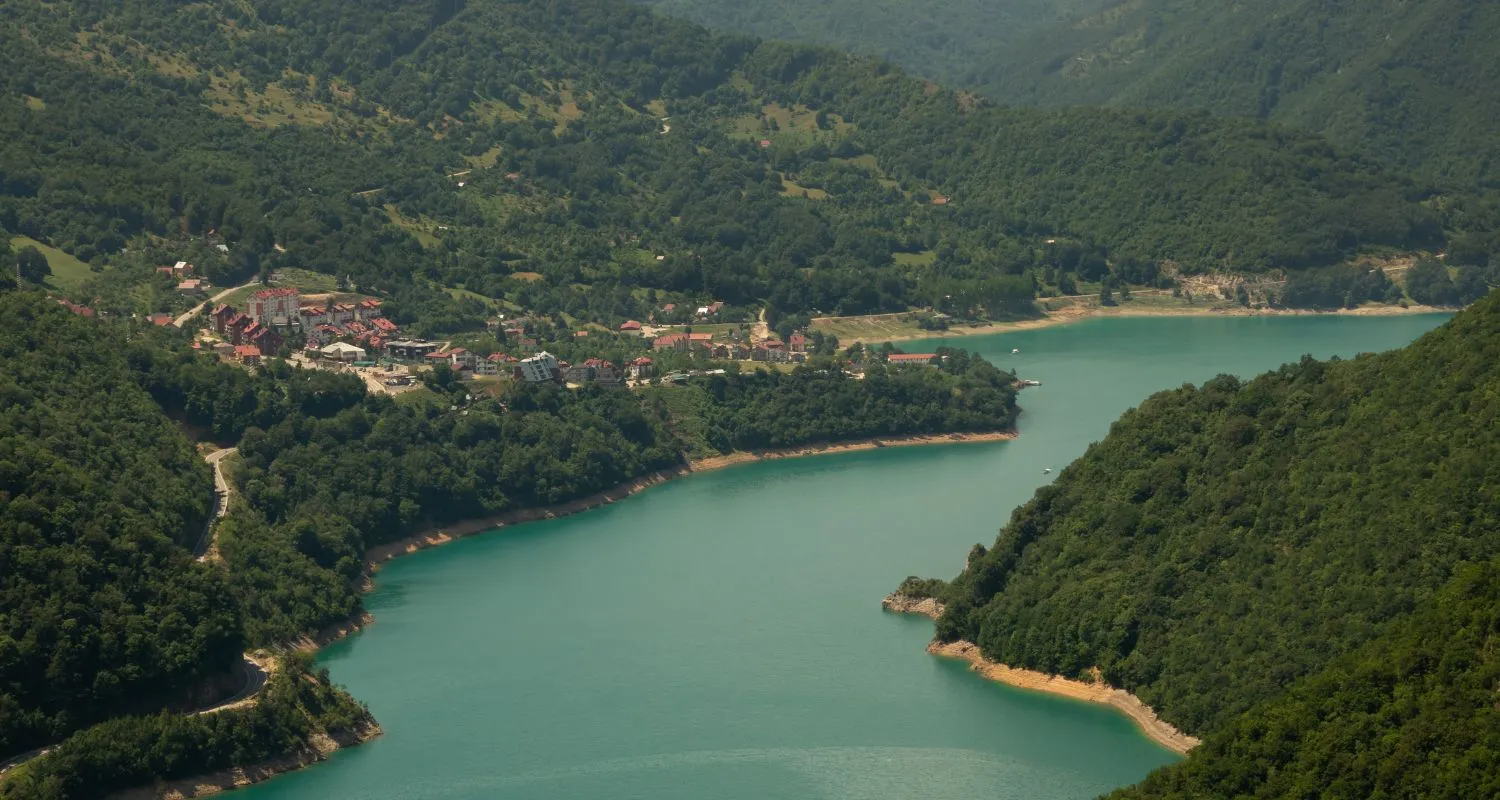
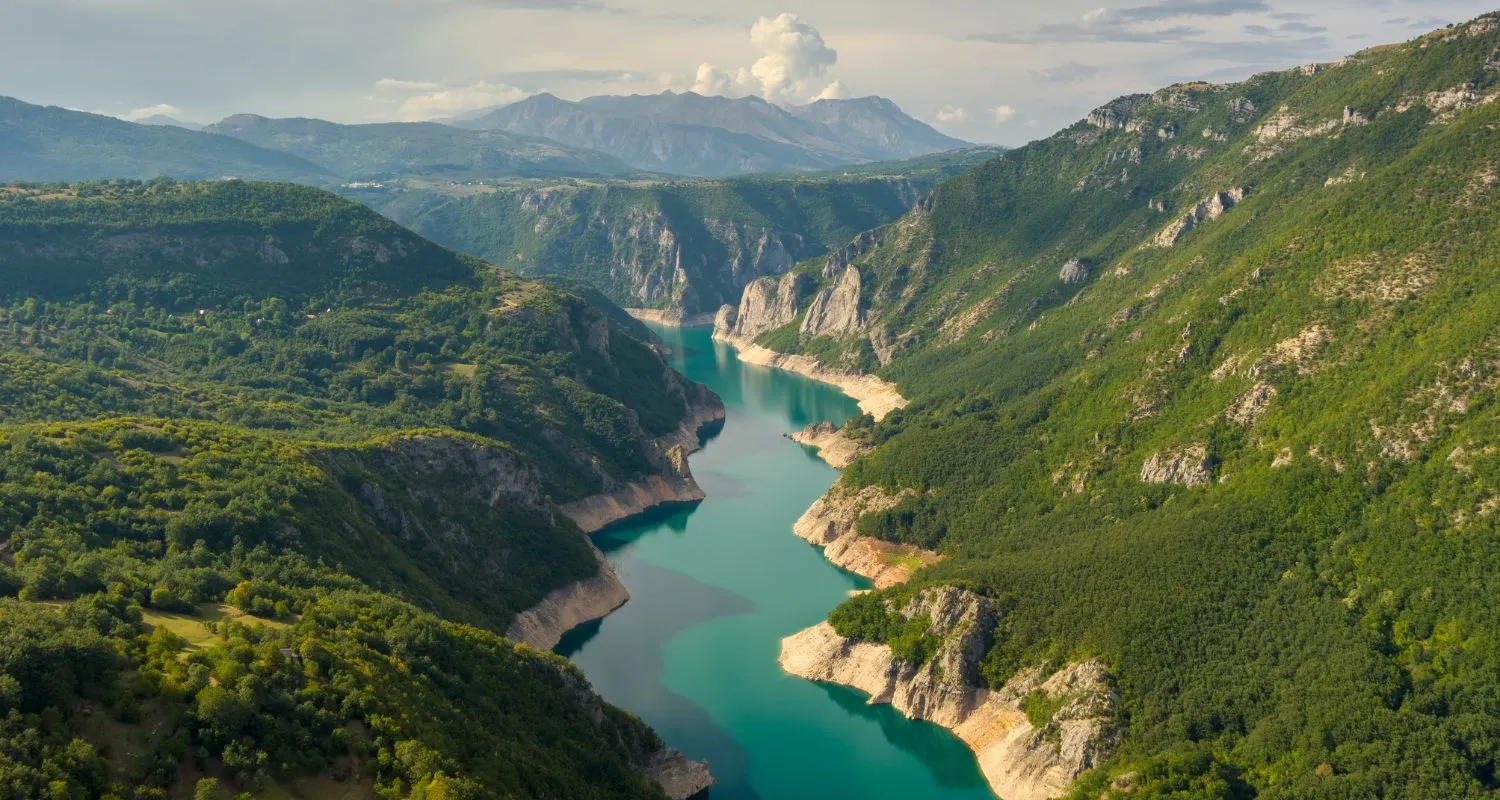
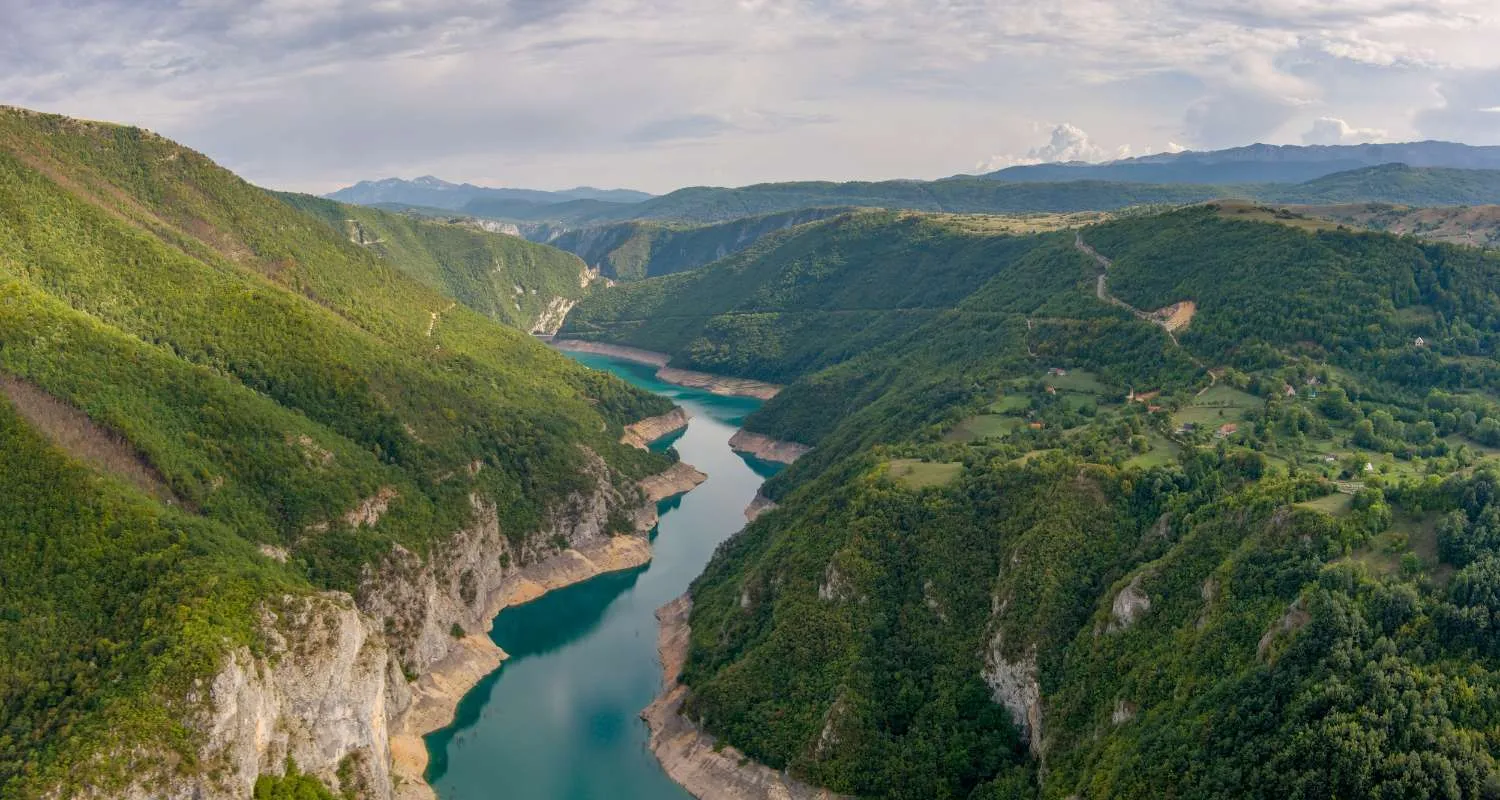
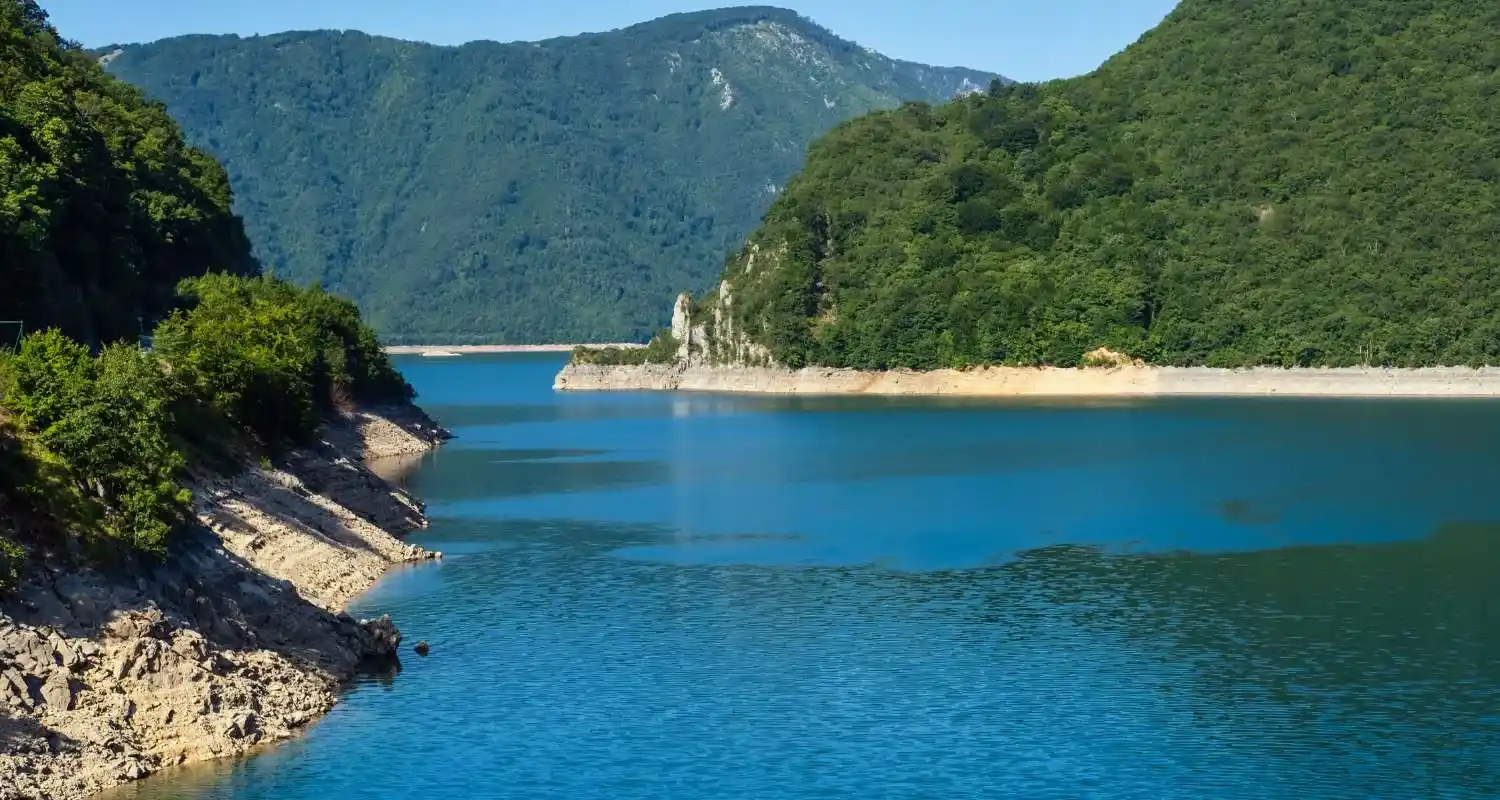
Surrounded by the mountain massifs of Bioč (2,397 m), Maglić (2,386 m) and Volujak (2,336 m), the lake lies in a canyon whose cliffs exceed 1,000 meters in height in some places. This contrast between vertical stone walls and calm water gives Piva Lake a visual character that photographs rarely manage to capture. The color of the water is not constant either: it varies from dark green to vivid turquoise, depending on the depth, time of day and angle of sunlight.
What many people do not expect is that you can actually swim in this lake. In summer, the surface warms up enough for swimming to be pleasant, though still refreshing in a way that coastal seas are not. It is also important to mention that Piva Lake is considered one of the largest drinking water reservoirs in the Balkans.
Where is Piva Lake located and what is the surrounding area like?
Piva Lake occupies the northwestern corner of Montenegro, in a part of the country that is geographically closer to Bosnia and Herzegovina than to the Montenegrin coast. Access to the lake passes through Plužine, one of the least populated municipalities in the country, and it is precisely this isolation that gives the entire area a character that more developed tourist centers lost long ago.
Geographical position and access points
Plužine is the main starting point for Piva Lake, regardless of the direction you are coming from. From Podgorica, it is about 150 kilometers along the M-3 main road through Nikšić, which takes approximately two and a half hours by car. From Nikšić, the distance is shorter, around 60 kilometers and a little over an hour behind the wheel.
If you are coming from Durmitor, the distance from Žabljak to Plužine is about 45 kilometers via the R-16 regional road, which is roughly a one-hour drive. All access roads are mountainous and winding, but spacious and very well maintained.
Landscape and shoreline features
Unlike Lake Skadar or coastal destinations where the shore is accessible and gentle, here the steep canyon walls drop directly into the water along most sections. Beaches in the classic sense are almost nonexistent, with the exception of the Town Beach in Plužine, which is one of the few arranged access points to the water. The rest of the shoreline is mostly rocky, occasionally interrupted by pine forests that descend all the way to the very edge of the lake.
What makes this landscape stand out is the sense of enclosure created by the canyon. The high stone walls on both sides, the road that in places passes through tunnels carved into the rock, and the almost complete absence of settlements along the shore give the impression that you are in a space that has not been adapted to people, but one that people have adapted to. We also suggest a shorter walk to the Zarisnik viewpoint above Plužine, from where you can see the entire stretch of the lake and the surrounding mountains. The climb takes about one hour and twenty minutes along a marked trail.
What activities are available at Piva Lake?
Piva Lake is not a place you come to just to tick attractions off a checklist, but a space that rewards those who love water, silence and outdoor movement. From paddling through the canyon and swimming in water that is safe to drink, to climbing along the rocks and visiting a monastery five centuries old, the offer is diverse but never overwhelming, as you will realize during your very first visit.
Kayaking and boat rides on Piva Lake
Kayaking and canoeing are the most popular ways to experience the lake up close, because from the shore you simply cannot see what opens up once you move deeper into the canyon. Piva Nature Park has its own kayaks available for rent in Plužine, while organized tours usually include one to two hours of paddling, with breaks for swimming and taking photos. The approximate price for an organized tour with a guide and equipment starts from 55 euros per person.

In addition to kayaking, local operators from Plužine offer boat cruises, with tours ranging from one hour to full-day trips that include stops at hidden spots along the lake, swimming and lunch with local hosts. If your schedule allows, we suggest a longer trip, because a short ride barely scratches the surface of what the Piva Lake canyon actually has to offer.
Swimming and beaches at Piva Lake
The Town Beach in Plužine remains the most accessible place for swimming, with an arranged entrance to the water and a sunbathing area just a few minutes from the town center. Along the shore, there are also several wild spots that can be reached on foot or by boat, but access requires good footwear and caution because the terrain is rocky and steep.
In summer, the surface water is pleasant for swimming, but still fresh enough to remind you of the altitude. Piva Lake has no waves or sea currents, which makes it especially suitable for relaxed swimming and for families with children. One practical tip: swim in the morning hours while the sun shines directly on the lake, because the canyon walls cast shade earlier than you might expect.
Via Ferrata Piva and hiking in the area
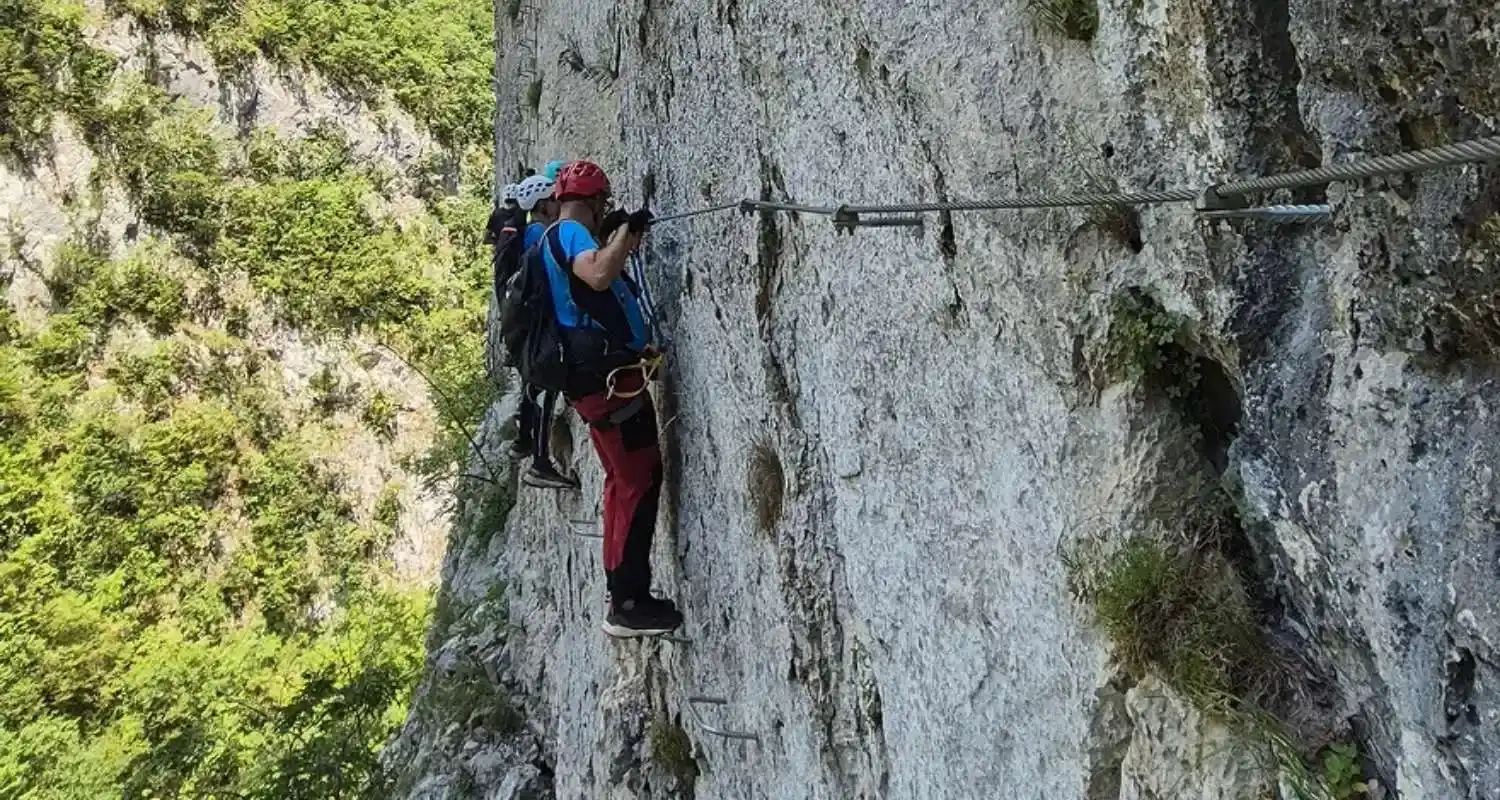
If the water is not enough adrenaline for you, Via Ferrata Piva offers a completely different perspective of the canyon. Opened at the end of 2024 near Plužine, this secured climbing route takes you about 130 meters above the Piva River, with an 80-meter vertical ascent along the rock. The difficulty rating is B/C, which means you do not have to be an alpinist, but you do need basic fitness and the willingness to look down.
The tour lasts two to three hours, with an approximate price of 65 euros per person for groups of 3 to 8 members, including equipment and a licensed guide. In addition to the via ferrata, the surroundings of Plužine also offer marked hiking trails, such as the ascent to Zarisnik or longer routes through the Borje forest complex toward Crkvičko Polje, which pass through some of the best-preserved parts of the Nature Park.
Visiting Piva Monastery
In the introduction, we mentioned that the monastery was moved because of the construction of the dam, but that fact only gains its full weight once you are there in person. Piva Monastery was built by the Metropolitan of Herzegovina, Savatije Sokolović, between 1573 and 1586, and more than 1,200 square meters of frescoes from the early 17th century have been preserved on its interior walls. Among them is one that is unique in the entire Orthodox world: a portrait of a man believed to be Grand Vizier Mehmed Pasha Sokolović, Savatije’s relative and the monastery’s protector.
The relocation itself, which lasted from 1969 to 1982, involved removing the frescoes from the walls using a special technique and placing them onto new walls at a higher location. Today, the monastery is located about 8 kilometers from the center of Plužine, and visits are possible every day and take no longer than an hour. If you are already staying at Piva Lake, this is an excursion that can easily fit into any plan.
How to get to Piva Lake?
Piva Lake is not located on any of the main tourist routes, and there is no highway or regular bus line from the coastal towns leading directly to it. That is exactly why transport is one of the key steps when planning a visit, and the good news is that the solution is quite simple.
Why is renting a car the most practical option?
There is regular public transport to Plužine and the lake from cities such as Nikšić and Podgorica, but it is not always practical enough for tourists. Bus lines to Plužine are not very frequent, and they leave you without the option to explore the lake shore, stop by the monastery or drive to the via ferrata. The simplest option is to rent a car in Podgorica or at the airport and head toward Plužine, giving you complete freedom of movement through an area where distances are short, but public transport is practically nonexistent.
A rental car is especially worthwhile because most of the places worth seeing in this part of Montenegro are not located in one single spot. From the lake to the monastery, from the via ferrata to Žabljak, everything is within a radius of around fifty kilometers, but without your own wheels, that circle becomes a mission impossible. If you are traveling as a couple or in a small group, a daily car rental often turns out to be cheaper than the combination of taxi rides you would otherwise have to pay for.
Routes and road conditions
We have already mentioned the specific distances earlier in the guide, so we will not repeat them here, but it is worth knowing that the road conditions are better than many people expect. The M-3 main road from Nikšić to Plužine has undergone a thorough reconstruction, so today this section is paved with new asphalt and is much safer than in previous years. The road is still winding because the terrain dictates it, but the quality of the surface and visibility are on a completely different level.
From the direction of Žabljak, the regional road is narrower but shorter, with beautiful views of the Piva Canyon during the descent toward the town. Regardless of the direction you are coming from, fill up your tank before you leave, because the nearest gas station is in Plužine, and the next one is only in Nikšić or Šavnik. Piva Lake is absolutely worth that hour or two behind the wheel. Just drive carefully and keep in mind that domestic animals may occasionally appear on the road, so caution is necessary.
Where to sleep and eat near Piva Lake?
Plužine is a small town, and its accommodation and food options reflect that, but this compactness also means that everything is within easy reach and that locals generally care about quality, because every recommendation and every criticism spreads quickly.
Accommodation: from campsites to apartments
There are no large hotels in Plužine, but that should not worry you. The offer is based on private apartments and rooms, which are increasingly available on platforms such as Booking, with prices noticeably lower than on the coast. For two people, you can roughly expect to pay 30 to 60 euros per night for a tidy apartment with a view of the lake or the mountains.
If you prefer staying closer to nature, there are several campsites and glamping locations around Piva Lake, right along the shore. In summer, demand grows faster than supply, especially in July and August, so we suggest booking your accommodation at least two to three weeks in advance. Outside the season, this problem does not exist, but the choice is not the same either.
Local cuisine and restaurants
Food in this part of Montenegro is mountainous, hearty and uncomplicated. Lamb cooked under the sač, homemade kajmak, Piva cheese, kačamak, cicvara and trout from the lake form the basis of almost every menu, and the portions are exactly what you would expect in the north, which means you are unlikely to leave hungry. Prices are pleasantly affordable, with main dishes usually ranging between 8 and 15 euros.

In Plužine itself, you will find several restaurants and taverns, with ethno restaurants located along the shore and overlooking Piva Lake standing out in particular. On boat cruises, local hosts often offer lunch prepared in the traditional way, which is in many ways a more authentic experience than a classic restaurant. If you have the chance, try Piva cheese while you are here, because it is hard to find outside this region.
When is the best time to visit Piva Lake?
The ideal period for a visit is from June to September, when the air and water temperatures are most suitable for swimming, kayaking and other outdoor activities. July and August are the warmest months and offer the longest days, but they are also the only months when you may experience something resembling crowds at Piva Lake, especially on weekends. In many ways, June and September are a better choice: the water is still warm enough, and there are half as many people.
May and October are for those who do not plan to swim, but want to hike, take photos or simply enjoy the peace. The temperatures are pleasant for walking, the autumn colors in October give the canyon a completely different character, and accommodation prices are lower than in the peak season. The only thing to keep in mind is that the days get shorter and that some kayak and cruise operators reduce their schedules or pause completely after September.
All that is left is to go
We have gone through the location, activities, transport, accommodation and food, which means you have enough information to plan your visit to the lake without any unpleasant surprises. What no guide can truly convey is what it actually feels like to find yourself in the canyon, surrounded by silence, water that changes color and heights that take your breath away. That is something you have to experience for yourself.
Whether you are coming for a day or a week, in summer or in autumn, with a kayak or without one, this part of Montenegro rewards everyone who takes the time to reach it. Rent a car, fill up the tank and head north. Piva Lake will not disappoint you.
FAQ
Can you swim in Piva Lake?
Yes, swimming is possible during the summer months, most often from June to September. The most accessible place for swimming is the Town Beach in Plužine, and there are also several wild spots along the shore.
How deep is the lake?
The greatest measured depth is 188 meters, which makes it one of the deepest artificial lakes in Europe. The average depth ranges between 70 and 120 meters, depending on the water level.
Are there restaurants and shops in Plužine?
Yes. In Plužine, there are several restaurants, taverns and markets that cover basic needs. The offer is more modest than in coastal towns, but perfectly sufficient for a stay of several days.
Is a guide required for Via Ferrata Piva?
Yes, the tour is carried out exclusively with a licensed guide, who is included in the approximate price of 65 euros per person. All equipment is provided on site, and the via ferrata is suitable even for beginners with basic fitness.
Is Piva Lake natural or artificial?
Piva Lake is artificial, created in 1975 with the construction of the Mratinje Dam on the Piva River. Despite this, the natural surroundings of the canyon and mountains give it an appearance that does not reveal its human-made origin.
 Instagram
 Whats App